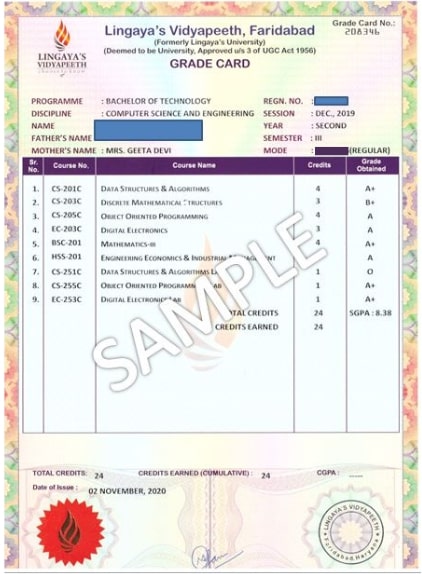
Let's be real. You're not doing a B.Tech or M.Tech at 27 just for the love of thermodynamics. You want a better title. A better salary. Maybe your manager's job, eventually. So yeah, the question you actually care about: who's hiring?
Lingaya's Vidyapeeth has been placing engineers since 1998. That's not a typo. Over two decades of sending diploma holders and working engineers into companies that actually matter. More than 20,000 alumni. 100+ companies tied up. Names you've actually heard of.
This page is about that. No fluff. Just the companies, what they look for, and how Lingaya's helps you get there while you're still holding your current job.
Most colleges bury their recruiter list somewhere nobody reads. We're putting it front and center, because this list does the talking.









Not because you're not capable. Because a checkbox wasn't ticked.
This degree ticks that box. It's UGC and AICTE approved. The same approvals that regular full-time engineering degrees carry. Your employer can't tell the difference between this and someone who studied full-time, because technically, there isn't one.
What changes after? Based on what Lingaya's alumni have experienced across these sectors:
You become eligible for Assistant Engineer, Associate Engineer, Executive Engineer — posts with actual authority and actual pay.
Many PSUs and state departments require B.Tech from a UGC-approved university. This degree qualifies you.
Your current employer — who's been watching you work for 3–5 years — now has the paperwork to move you up.
With a B.Tech from Lingaya's, pursue M.Tech here or elsewhere — for senior roles, R&D, or PSU eligibility.
The salary gap between diploma holders and B.Tech engineers in the same field is real. This degree closes it.
You already know the work. Now you have the credential that tells the room you belong at the table.
The placement cell helps you rewrite your resume to reflect your degree, your experience, and the career level you're targeting. Not the one you're at right now. There's interview prep by industry experts. Not the generic "tell me about yourself" stuff. The kind that prepares you for panel rounds at L&T, Mahindra, or Nagarro.
Exclusive sessions with professionals from the sector. These aren't motivational talks. They're about what the industry actually wants right now: the skills, the tools, the kind of projects that get you noticed. You're learning alongside your degree. This is part of how you stay current.
Exclusive sessions with professionals from the sector. Not motivational talks — these are about what the industry actually wants right now: skills, tools, the kind of projects that get you noticed.
100+ company tie-ups aren't just for fresh placements. They're a signal of credibility. When Lingaya's engineers apply to these companies, there's existing familiarity with the university. That matters more than most people think.
This isn't a number they put up to look impressive. Okay, maybe a little. But there are twenty thousand people who went through Lingaya's. Some of them are now hiring managers. Some are senior engineers. Some of them are in the companies on that recruiter list above.
Alumni networks at this scale actually work, especially in engineering sectors where referrals are how many roles get filled quietly, before they even go public.
Let's be specific. Because "working professionals" can mean anything. Here's exactly who benefits from Lingaya's placement ecosystem:
Civil, Mechanical, Electrical, ECE or CS diploma holders who want to break the career ceiling in their current company.
The next designation literally requires a B.Tech qualification. You've been doing the work — now get the title that reflects it.
Want to move from technical assistant to engineer-level roles? Many of those posts require a degree from a recognised university.
Doing the engineer's work for years but paid like a technician. The degree changes that salary negotiation permanently.
B.Tech holders who want M.Tech for senior roles, R&D positions, teaching eligibility, or better PSU access.
An ECE diploma holder doing telecom work who wants to move to IT. The degree opens the door. The placement cell handles the positioning.
Lingaya's Vidyapeeth runs a dedicated Corporate Resource Centre, the same CRC that supports the main university's placement operations, extended for the engineering flexible programmes.
And the CRC doesn't vanish after you graduate. Alumni remain connected. That's partly how the 20,000+ number keeps doing useful things.
We're not going to claim a "100% placement record." Nobody with a working brain believes those numbers. What we will say is this:
You're coming in with work experience. You're not a fresher competing for entry-level jobs. The degree you get here, UGC + AICTE approved, NAAC accredited, from a university ranked among Asia's 100 best by KPMG, legitimises what you already know how to do.
The placement support helps you position yourself. The alumni network opens doors. The company tie-ups add credibility to your application. But the final push? That's the combination of your experience and your new degree. That combination is powerful. Unusually so.
Yes. The degree is from a UGC-approved deemed university and is AICTE-approved. Many PSUs specify UGC/AICTE recognised degrees as eligibility. Always check the specific PSU's notification, but yes, this degree qualifies.
Very much so. Think of it as internal career advancement support. Lingaya's helps you position your degree alongside your experience for promotions, role changes, or if you decide to switch companies after graduation.
That's one of the most common reasons working professionals do this. An ECE diploma holder who's been doing telecom work and wants to move to IT, for example. The degree opens the door. The placement cell helps with the positioning.
Yes. The B.Tech from Lingaya's Vidyapeeth makes you eligible for the M.Tech programme, available in Civil, Mechanical, CSE, or ECE, also offered in flexible timings for working professionals.

**As per the article 7.10 of Chapter-VII of AICTE APH 2023-24 and in accordance with the public notice published on 14 Aug, 2020 by AICTE vide F.No. AICTE/AB/Academics/2020-21.
Copyright 2026 Lingayas Vidyapeeth